 Admin
Admin When I started searching for rustic recipes for people who only have a stovetop, I was living in a studio apartment with a hot plate, a single cast iron skillet, and zero counter space. No oven. No microwave. Just two burners and a stubborn refusal to eat takeout every night. Turns out, some of the best comfort food in the world never needed an oven in the first place. Old-school cooking happened over open flames, in pots, on griddles. That’s stovetop territory.
1. One-Pot French Onion Soup (Yes, Without a Broiler)
Most people think French onion soup requires a broiler for that bubbly cheese top. It doesn’t. Caramelize four large yellow onions low and slow in butter for about 45 minutes. Don’t rush this step. The deep golden color is where all the flavor lives.
Add beef broth, a splash of dry white wine, and fresh thyme. Let it simmer for 20 minutes. Ladle it into bowls, lay a thick slice of toasted bread on top (toast it in a dry skillet), pile on Gruyère, and cover the bowl with a plate for two minutes. The cheese melts beautifully. I’ve made this version at least thirty times, and nobody has ever complained about the missing broiler.
2. Skillet Cornbread That Actually Has Crust
Cornbread in a skillet on the stovetop sounds wrong until you try it. Mix one cup of cornmeal, half a cup of flour, a tablespoon of sugar, a teaspoon of baking powder, salt, one egg, and about a cup of buttermilk. Heat your cast iron skillet with a generous tablespoon of bacon grease or butter until it shimmers.
Pour the batter in and immediately cover with a tight lid. Cook on the lowest heat setting for about 20 to 25 minutes. The bottom gets this incredible golden crust while the inside stays tender. I learned this trick from a woman at a farmer’s market in Tennessee, and it changed everything I thought I knew about cornbread. Flip it onto a plate and serve it warm with honey butter.
3. Rustic White Bean and Sausage Stew
This is one of those meals that tastes like you spent all day cooking when it really takes about 40 minutes. Brown sliced Italian sausage (I prefer hot, but mild works too) in a Dutch oven or heavy-bottomed pot. Remove the sausage and sauté diced onion, garlic, and chopped carrots in the rendered fat.
Add two cans of cannellini beans (drained), a can of diced tomatoes, chicken broth, and a handful of torn kale or spinach. Toss the sausage back in. Season with smoked paprika, red pepper flakes, and a bay leaf. Let it simmer uncovered for 25 minutes until everything thickens up. Finish with a squeeze of lemon. This stew is what I make when the weather turns cold and I want something that fills the apartment with the kind of smell that makes neighbors jealous.
4. Stovetop Dutch Baby (Puffy Pancake Without the Oven)
A traditional Dutch baby goes into a screaming hot oven. But a stovetop version, cooked covered in a well-seasoned skillet, gives you something closer to a thick, custardy crepe that puffs up around the edges. Whisk together three eggs, three-quarters cup of flour, three-quarters cup of milk, a pinch of salt, and a teaspoon of vanilla.
Melt two tablespoons of butter in a 10-inch skillet over medium heat. Pour the batter in, cover tightly, and reduce heat to medium-low. Cook for about 12 to 15 minutes without peeking. When you lift the lid, the edges should be golden and slightly puffed. Dust with powdered sugar, add fresh berries or a drizzle of maple syrup, and eat it straight from the pan. The center stays soft and almost creamy. It won’t look Instagram-perfect like an oven version, but honestly, it tastes better to me.
5. Shakshuka with Crusty Bread on the Side
Shakshuka might be the single greatest stovetop meal ever invented. Sauté diced onion and bell pepper in olive oil until soft. Add garlic, cumin, smoked paprika, and a pinch of cayenne. Pour in a can of crushed San Marzano tomatoes and let it simmer until the sauce thickens, about 10 minutes.
Make small wells in the sauce and crack eggs directly into them. Cover the skillet and cook on low for 5 to 7 minutes until the whites set but the yolks stay runny. Crumble feta cheese over the top and scatter fresh cilantro or parsley. Serve it with thick slices of sourdough that you’ve toasted in a separate dry pan. I eat this for breakfast, lunch, and dinner without apology. It is rustic cooking at its absolute best, and it never requires more than one burner.
6. Stovetop Braised Short Ribs
Braised short ribs sound fancy. They’re not. Season bone-in short ribs generously with salt and pepper, then sear them in a heavy pot with a little oil until deeply browned on all sides. This takes about 8 minutes, and you should not skip it because the browning builds the entire flavor base.
Remove the ribs and sauté onion, celery, and carrot in the same pot. Add tomato paste and cook it for a minute. Deglaze with a cup of red wine (something you’d actually drink, not cooking wine), scraping up all those brown bits. Add beef broth until the ribs are mostly submerged when you nestle them back in. Cover and cook on the lowest possible heat for 2.5 to 3 hours. The meat will fall off the bone. Serve over mashed potatoes or polenta. This is the kind of meal that makes people ask if you went to culinary school.
7. Rustic Potato and Leek Soup
Three ingredients carry this entire soup: potatoes, leeks, and good butter. Slice three large leeks (white and light green parts only) and cook them slowly in four tablespoons of butter over medium-low heat for about 15 minutes. They should be silky and sweet, never browned.
Add cubed Yukon Gold potatoes and enough chicken or vegetable broth to cover. Simmer until the potatoes are completely tender, about 20 minutes. Mash roughly with a fork or potato masher for a chunky, rustic texture. Don’t use a blender unless you want something smooth. Season with salt, white pepper, and a splash of heavy cream. I top mine with chives and crispy fried shallots from a jar (Trader Joe’s makes great ones). This soup feels like a warm blanket on a cold night.
8. Campfire-Style Stovetop Chili
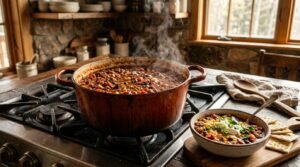
Good chili has never needed an oven. Brown a pound of ground beef or chuck in a large pot, breaking it into rough chunks rather than fine crumbles. You want texture. Add diced onion, jalapeño (seeds in if you like heat), and minced garlic.
Stir in chili powder, cumin, oregano, and a tablespoon of cocoa powder. That last ingredient sounds odd but adds a deep, smoky richness that people can never quite identify. Add a can of kidney beans, a can of black beans, crushed tomatoes, and a cup of beef broth. Simmer uncovered for at least 45 minutes, stirring occasionally. The longer it goes, the better it gets. Serve with shredded cheddar, sour cream, and saltine crackers. I’ve won a neighborhood chili cookoff with this exact recipe, made entirely on a two-burner hot plate.
9. Stovetop Ratatouille
Ratatouille is peasant food by design, which makes it a perfect fit for rustic recipes for people who only have a stovetop. Dice eggplant, zucchini, yellow squash, bell peppers, and tomatoes into roughly equal pieces. Cook the eggplant first in olive oil with salt until golden. Set aside.
Sauté onion and garlic, then add the peppers. After five minutes, add zucchini and squash. Finally, add the tomatoes, the cooked eggplant, and a few sprigs of fresh thyme or a teaspoon of herbs de Provence. Cover and simmer on low for 30 minutes. The vegetables break down into this beautiful, jammy mixture that you can eat on its own, over rice, or scooped up with crusty bread. Leftovers are even better the next day. Julia Child would approve.
10. Cast Iron Skillet Flatbread
No oven doesn’t mean no bread. Mix two cups of flour, a teaspoon of baking powder, a teaspoon of salt, a tablespoon of olive oil, and about three-quarters cup of warm water. Knead for a few minutes until smooth. Divide into four balls and roll each one thin.
Heat a dry cast iron skillet over medium-high heat until it’s very hot. Cook each flatbread for about 2 minutes per side. You’ll see bubbles form and charred spots appear. Brush with melted garlic butter the second it comes off the heat. These taste like a cross between naan and pita, and they go with literally everything on this list. I make a batch almost every week and freeze the extras between sheets of parchment paper.

Frequently Asked Questions
What equipment do I need for stovetop-only cooking?
A good cast iron skillet and a heavy-bottomed pot or Dutch oven will cover about 90% of your cooking needs. Add a sturdy lid that fits tightly and a basic set of wooden spoons. You don’t need anything expensive. Lodge makes excellent cast iron for under $30, and it lasts a lifetime with proper care.
Can you really braise meat without an oven?
Absolutely. Braising is just cooking something low and slow in liquid, and your stovetop can do that perfectly. Keep the heat on its lowest setting, use a tight-fitting lid, and check occasionally to make sure the liquid hasn’t evaporated. I’ve braised short ribs, pork shoulder, and chicken thighs on the stovetop with incredible results every single time.
Are rustic recipes for people who only have a stovetop good for meal prep?
Most of them are fantastic for meal prep. Soups, stews, and chili actually improve after sitting in the fridge overnight. I usually make a big batch of bean stew or chili on Sunday and portion it out for the week. Flatbreads freeze well too. The only recipes that don’t hold up great are the eggs in shakshuka, which you should cook fresh.
What’s the best oil or fat for stovetop rustic cooking?
Butter and olive oil handle most jobs. For high-heat searing, I reach for avocado oil because it has a higher smoke point. Bacon grease is incredible for cornbread and adds flavor you can’t replicate with anything else. I keep a small jar of it in the fridge at all times. Lard works too if you can find good quality stuff from a butcher.
How do I keep food from burning on a stovetop without temperature control?
A heat diffuser is your best friend. It sits between the burner and the pot and distributes heat evenly. They cost about $10 and make a huge difference for long simmering recipes. If you don’t have one, use your thickest, heaviest pot and keep the flame as low as possible. Stirring regularly helps too.
Conclusion
Cooking without an oven taught me more about real food than any fancy kitchen ever could. Every recipe on this list came from actual nights in my tiny apartment, feeding myself and friends with nothing but a couple of burners and some good ingredients. So what’s the first thing you’re going to make?