 Admin
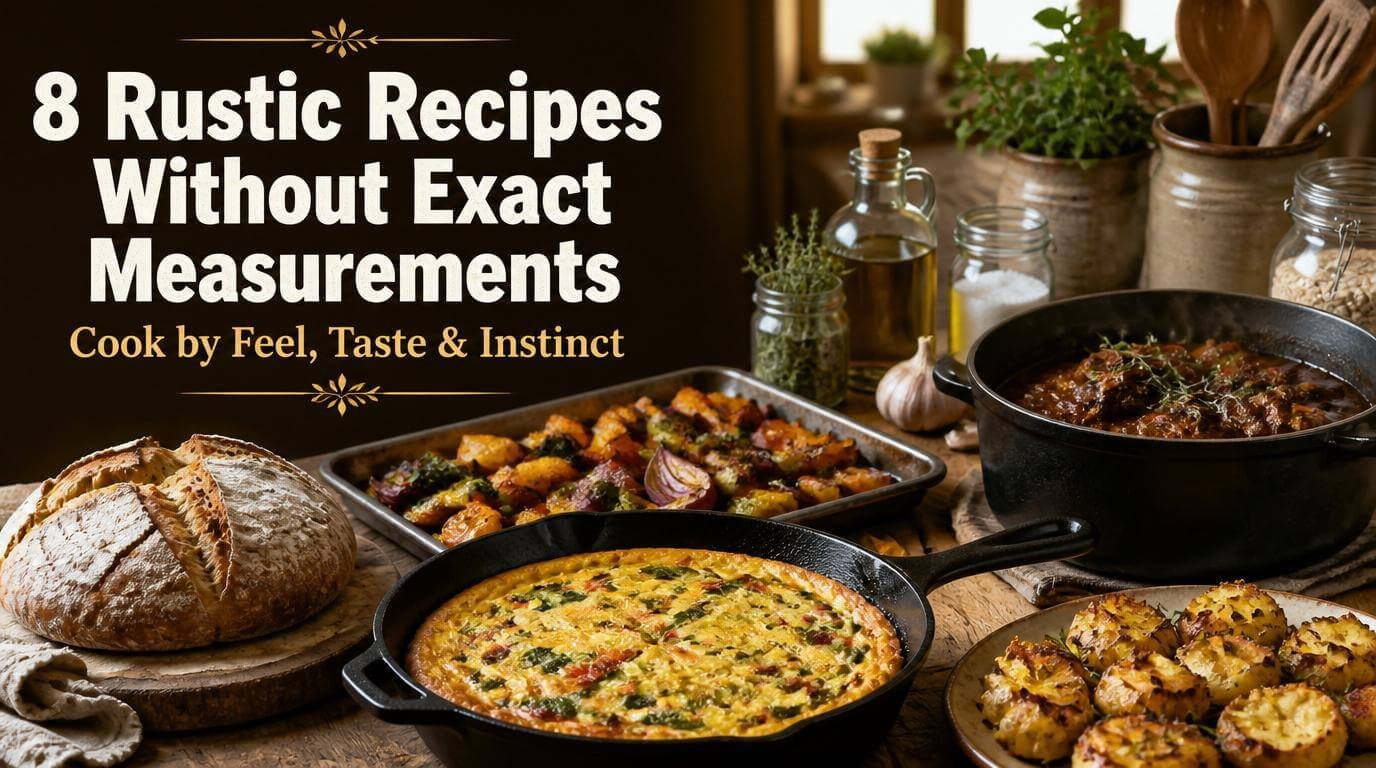
Admin If you’ve ever rage-closed a recipe tab because it demanded 3/4 teaspoon of something ridiculous, these rustic recipes for people who hate following exact measurements are your people. I’ve been cooking this way for over a decade. A handful of this, a splash of that, tasting as I go. My food is never identical twice, and honestly, that’s the whole point. Precision is for baking. Dinner is for vibes.
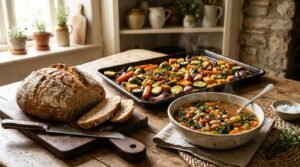
1. Peasant Bread That Forgives Everything
This bread changed how I think about baking. You stir together roughly 3 cups of flour, a packet of yeast, a big pinch of salt, and about a cup and a half of warm water. That’s it. No kneading.
Dump the shaggy dough into a greased bowl, cover it, and let it rise for a couple of hours. Then bake it at 425°F in a greased oven-safe pot. The crust comes out golden and crackling. I’ve made this with more water, less water, bread flour, all-purpose, even a handful of whole wheat thrown in. It works every single time. The original recipe circulates under “Peasant Bread” by Alexandra Stafford, and it’s genuinely bulletproof.
2. Sheet Pan Roasted Vegetables (The “Whatever’s Dying in Your Fridge” Method)
Every vegetable roasts well. Every single one. Cut things into roughly the same size, toss them with olive oil and salt, spread them on a sheet pan, and roast at 400 to 425°F until they look good. That’s the entire recipe.
I usually grab whatever’s about to go bad. Last week it was half a bag of Brussels sprouts, two carrots, and a lonely sweet potato. A squeeze of lemon at the end, maybe some Parmesan if I’m feeling fancy. The “recipe” is really just heat plus fat plus salt plus time. Harder vegetables like potatoes need about 35 to 40 minutes. Softer ones like zucchini need 20. You learn the timing by watching, not by setting a timer.
3. Stone Soup (Rustic Broth-Based Soup with No Rules)
I call this stone soup because you literally throw in whatever you have and it turns into something. Start by sautéing onion and garlic in butter or olive oil. Add broth, any kind. Then add whatever vegetables, beans, grains, or pasta you want.
Season with salt, pepper, and one flavor anchor. That anchor might be a Parmesan rind, a bay leaf, a spoonful of miso paste, or a can of diced tomatoes. Simmer until everything is tender. I make this at least once a week, and it’s never the same soup twice. The Parmesan rind trick I picked up from Ina Garten’s minestrone years ago, and I’ve never stopped using it. It adds this deep savory richness that makes people think you cooked all day.
Why Rustic Recipes for People Who Hate Exact Measurements Actually Work Better
Here’s something nobody tells you: most savory cooking doesn’t need precision. Professional chefs don’t measure. They taste, adjust, and feel their way through a dish. The recipes that demand exact measurements for a stew or a stir fry are written that way for liability and consistency, not because the food requires it.
Rustic cooking leans into this truth. It trusts your senses. Does it smell good? Does it taste right? Is the color where you want it? Those are better guides than any measuring cup. Once I stopped following recipes to the letter, I started actually understanding food. I learned that acid brightens a flat dish, that fat carries flavor, that salt is something you build gradually. Those lessons stick in a way that “add 1/2 teaspoon” never does.
4. Skillet Frittata with Whatever Cheese You Have
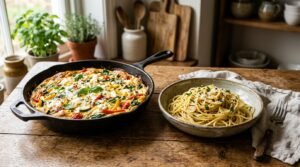
Crack six to eight eggs into a bowl. Whisk them loosely. Add a splash of milk or cream if you have it, skip it if you don’t. Season with salt and pepper.
Sauté whatever fillings you want in an oven-safe skillet. I rotate between sautéed spinach and feta, roasted red peppers and goat cheese, or just leftover vegetables from the night before. Pour the eggs over the fillings, cook on medium until the edges set, then slide the whole skillet under the broiler for three to four minutes. The top puffs up and gets golden. I use my Lodge cast iron skillet for this every time, and the slight unevenness of a cast iron frittata is part of its charm. Perfect circles are for quiche shops.
5. One-Pot Pasta with Garlic, Oil, and Whatever Herb Isn’t Dead Yet
Aglio e olio is the patron saint of “I have nothing in the house” dinners. Boil pasta. While it cooks, warm a generous amount of olive oil in a pan with thinly sliced garlic and red pepper flakes. When the garlic just barely turns golden, toss in the drained pasta with a splash of the starchy cooking water.
The ratio of garlic to oil to pepper flakes? I genuinely eyeball it every time. More garlic if I’m in the mood. More pepper flakes if I want heat. A handful of fresh parsley or basil if something green is still alive on my counter. Finish with Pecorino Romano if you have it. The pasta water is the real secret here. That starchy liquid emulsifies with the oil and creates a silky sauce that clings to every strand. You don’t need a recipe. You need confidence and good olive oil.
6. Rustic Galette (The Pie for People Who Can’t Make Pie)
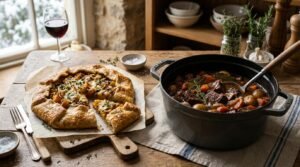
A galette is just a flat pie where imperfection is the entire aesthetic. Mix roughly a cup and a half of flour with a stick of cold butter, a pinch of salt, and enough ice water to bring it together. Wrap it up and refrigerate for 30 minutes.
Roll it out into a rough circle on parchment paper. Pile your filling in the center, leaving a two-inch border. Fold the edges up over the filling, overlapping as you go. Bake at 400°F until golden. I’ve done this with sliced tomatoes and mozzarella, sautéed leeks and Gruyère, and peaches with brown sugar. The crust cracks and folds unevenly, and that’s what makes it beautiful. Nobody has ever looked at my galette and said, “This would be better if it were more precise.” They just eat it.
7. Braised Anything (The “Low and Slow” Approach)
Braising is the most forgiving technique in cooking. Brown a piece of meat (chuck roast, chicken thighs, pork shoulder) in a heavy pot. Remove it. Sauté aromatics like onion, carrot, and celery in the drippings. Add liquid, maybe wine, maybe broth, maybe a can of crushed tomatoes, until it comes about halfway up the meat.
Cover the pot and put it in a 300 to 325°F oven for two to four hours. That’s it. The meat becomes fall-apart tender regardless of whether you added exactly one cup of wine or “most of what was left in the bottle.” I braise something almost every Sunday in winter using my Dutch oven, and I’ve literally never measured the liquid. You just need enough to keep things moist. The collagen in tough cuts does all the heavy lifting, turning into gelatin that makes everything rich and silky.
8. Smashed Potatoes with Crispy Edges
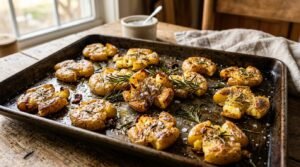
Boil small potatoes (Yukon Gold or baby reds work best) until they’re fork-tender. Drain them. Spread them on an oiled sheet pan. Use the bottom of a glass or a potato masher to smash each one flat, but not too flat. Drizzle with more olive oil, sprinkle generously with salt and any seasoning you want.
Roast at 425°F for about 25 minutes until the edges get deeply crispy and golden. I sometimes add rosemary, sometimes garlic powder, sometimes just flaky Maldon salt. There’s no wrong move here. The smashing doesn’t need to be uniform. The ugly, cracked, uneven ones with the most exposed surface area get the crispiest. Function follows chaos in this recipe, and it’s glorious.
Tips for Cooking Without Measurements and Actually Enjoying It
Cooking without measurements isn’t about being reckless. It’s about building a few instincts that replace the need for cups and spoons.
Season in layers. Add a little salt when you sauté, a little more when you add liquid, then taste and adjust at the end. This is more effective than dumping a measured amount in at one stage.
Trust your palate over the recipe. If something tastes flat, it probably needs acid (lemon juice, vinegar) or salt. If it tastes sharp, add a bit of fat or something sweet to round it out.
Start with less than you think you need. You can always add more garlic, more spice, more sauce. You can’t take it away. This one rule gives you freedom to experiment without fear.
Keep a “flavor anchor” pantry. Good olive oil, soy sauce, Dijon mustard, Parmesan, lemons, hot sauce, and decent salt (I like Diamond Crystal kosher salt) will rescue almost any dish from blandness. These staples let you cook on instinct because you always have something to reach for.
Frequently Asked Questions
Are rustic recipes for people who hate following exact measurements good for beginners?
Absolutely. They’re actually better for beginners because you learn to taste and adjust instead of blindly following steps. You develop real cooking instincts faster. Start with something simple like roasted vegetables or a frittata, where the stakes are low and the results are almost always good no matter what you do.
What if I add too much of something?
It happens, and it’s rarely a disaster. Too much salt? Add a squeeze of lemon or a bit of sugar to balance it. Too much heat? Stir in some cream, yogurt, or butter. Too much garlic? Honestly, I’ve never experienced this problem, but if you have, more oil and a longer cook time will mellow it out.
Can I bake without exact measurements too?
Baking is trickier because it’s more chemistry than art. Bread and galettes are the most forgiving baked goods since they tolerate variation well. Cakes, cookies, and pastries generally need more precision. Stick to rustic baked items like focaccia, soda bread, and drop biscuits if you want to keep things loose.
How do I know when something is “done” without a timer?
Use your senses. Roasted vegetables should have browned edges and yield easily to a fork. Braised meat should pull apart with gentle pressure. Pasta should taste tender but still have a tiny bit of resistance. Bread should sound hollow when you tap the bottom. After cooking this way a few times, you’ll stop needing timers for most things.
What’s the best cookware for this style of cooking?
A cast iron skillet, a sheet pan, and a Dutch oven will cover about 90% of rustic cooking. Lodge makes affordable cast iron that lasts forever. For sheet pans, the Nordic Ware half-sheet is the one every food blogger owns for a reason. A good Dutch oven like a Lodge or Le Creuset handles braising, bread baking, and soups without breaking a sweat.
Conclusion
Cooking without exact measurements isn’t lazy. It’s actually a more honest and enjoyable way to feed yourself and the people around you. Once you stop treating recipes like instruction manuals and start treating them like loose suggestions, dinner gets a lot more fun. What’s the dish you always make without measuring a single thing?