 Admin
Admin When I first searched for rustic recipes for first time cooks after moving out, I had a dull knife, one pot, and a fridge with nothing but hot sauce and hope. My mom’s cooking felt a million miles away, and takeout was draining my bank account faster than rent. I needed meals that felt warm and homey but didn’t require culinary school. These are the recipes that saved me, and honestly, they still rotate through my weekly dinners years later.
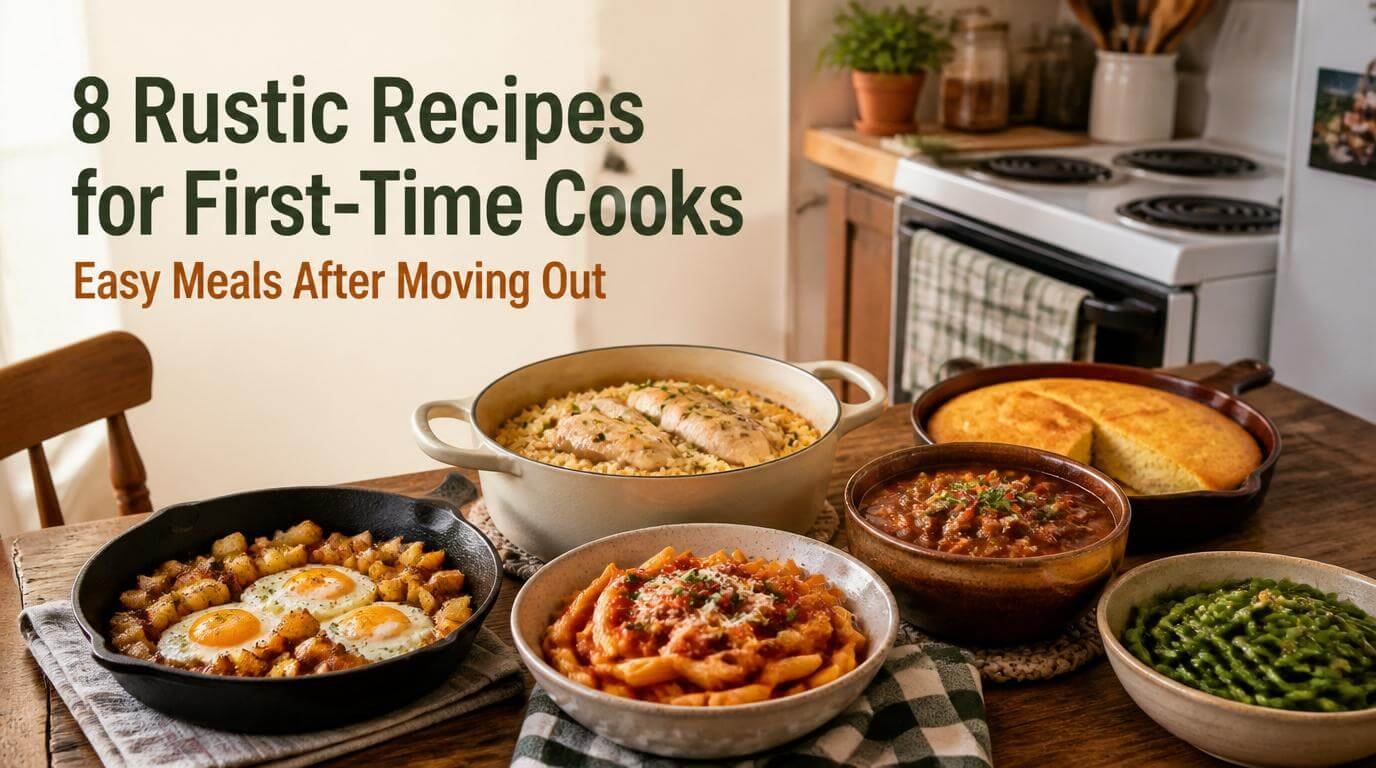
1. One-Pot Chicken and Rice
This was the first real meal I ever made in my apartment, and I still remember how proud I felt scraping the bottom of the pot for seconds. You brown chicken thighs (bone-in, skin-on, because they’re cheap and forgiving), toss in diced onion and garlic, add rice and chicken broth, and let it all cook together for about 30 minutes.
The chicken fat flavors the rice in a way that feels like something your grandmother would serve on a Sunday. Season with salt, pepper, and a little paprika. That’s it. I used a $15 pot from Walmart and it turned out better than half the restaurants near my place. If you burn the bottom slightly, that crispy layer is actually a feature, not a mistake. In many cultures they call it “socarrat” and fight over who gets to eat it.
2. Rustic Skillet Potatoes With Eggs
Potatoes and eggs might sound boring, but cooked the right way, they feel like a rustic farmhouse breakfast even at 9 PM on a Tuesday. Dice up two or three potatoes into small cubes, toss them in a hot skillet with olive oil, and let them get golden and crispy. Add salt, garlic powder, and whatever herbs you have.
Once the potatoes are done, push them to the sides and crack two eggs right into the center of the skillet. Cover it for a couple minutes so the whites set but the yolks stay runny. When you break those yolks over the potatoes, it becomes a sauce. This was my go-to meal during my first month living alone because potatoes cost almost nothing and eggs are basically a dollar a dozen. I ate this three times a week and never got tired of it.

3. Simple Tomato Pasta With Garlic Bread
Every new cook needs a pasta recipe they can make with their eyes half closed, and this one is mine. Boil your spaghetti or penne (I usually grab the Barilla box), and while it cooks, heat olive oil in a pan with sliced garlic until the garlic turns golden. Add a can of crushed San Marzano tomatoes, a pinch of sugar, salt, red pepper flakes, and let it simmer for 15 minutes.
For the garlic bread, split a baguette, spread butter mixed with garlic and parsley on each half, and broil it in the oven for three minutes. Watch it closely because the line between “perfectly toasted” and “on fire” is about 30 seconds. This meal costs maybe four bucks total and feeds you twice. The sauce tastes slow-cooked even though it absolutely is not, and the garlic bread makes it feel like a whole event.
4. Hearty Bean and Sausage Stew
This is the recipe that made me realize rustic recipes for first time cooks after moving out don’t need to be complicated to be filling. Grab some smoked sausage (Hillshire Farm works great), slice it into rounds, and brown it in a pot. Add a diced onion, two cans of white beans (drained), a can of diced tomatoes, and enough chicken broth to cover everything.
Season with thyme, a bay leaf, salt, and pepper. Let it simmer for 20 minutes. The beans break down slightly and thicken the broth into something rich and stew-like without you doing anything extra. I made this on a cold November night during my first winter alone, and I swear it warmed up my entire studio apartment. Serve it with crusty bread for dipping and you’ve got a meal that feels like it took hours but really took 30 minutes.

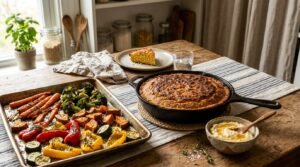
5. Sheet Pan Roasted Vegetables
Roasting vegetables changed my entire relationship with food, and I’m not being dramatic. Before moving out, I thought I hated vegetables. Turns out, I just hated steamed vegetables. Cut up whatever you have, carrots, broccoli, sweet potatoes, bell peppers, zucchini, and toss them on a sheet pan with olive oil, salt, pepper, and a little cumin.
Roast at 425°F for about 25 minutes until the edges get caramelized and slightly crispy. That caramelization is where all the flavor lives. The natural sugars come out and everything tastes sweeter and more complex than you’d expect from a bunch of raw vegetables. I pair these with rice or just eat them straight off the pan standing in my kitchen. No judgment. This is your apartment now, you make the rules.
6. Skillet Cornbread
Nothing says rustic like cornbread cooked in a cast iron skillet, and if you only buy one piece of kitchen equipment after moving out, make it a Lodge cast iron pan. Mix one cup of cornmeal, one cup of flour, a tablespoon of sugar, a tablespoon of baking powder, a pinch of salt, one egg, a cup of milk, and a quarter cup of melted butter.
Heat your skillet in the oven at 400°F with a little butter melting in it, pour the batter in (you’ll hear that beautiful sizzle), and bake for 20 minutes. The bottom gets a golden crust from the hot skillet that is honestly the best part. I make this alongside the bean stew from earlier and it turns a regular weeknight into something that feels intentional and cozy. The Lodge 10.25-inch skillet costs about $20 and will literally outlive you.
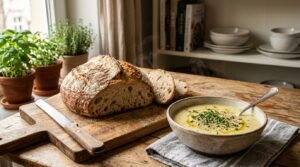
7. Potato and Leek Soup
Soup was intimidating to me until I realized that most soups are just “cook stuff in liquid and then blend it.” This one uses four potatoes, two leeks (sliced and washed well because they hide dirt), butter, chicken broth, and a splash of cream. Sauté the leeks in butter until soft, add cubed potatoes and broth, simmer until the potatoes are tender, and then blend.
You can use a $25 immersion blender right in the pot, which also saves you from the nightmare of pouring hot liquid into a regular blender and having the lid pop off. Ask me how I know. Season with salt, white pepper, and a little nutmeg. This soup is creamy, comforting, and makes about four servings. I started making it when I got sick of spending $8 on mediocre soup from the deli near my office.
8. Rustic Bread in a Dutch Oven
I know baking bread sounds advanced, but this no-knead method is genuinely foolproof and it’s the recipe that made my friends think I was suddenly a real adult. Mix three cups of flour, a quarter teaspoon of instant yeast, one and a quarter teaspoons of salt, and one and a half cups of warm water. Stir it until shaggy, cover it, and leave it on your counter for 12 to 18 hours.
The next day, shape it loosely into a ball, let it rest for 30 minutes, then bake it in a preheated Dutch oven at 450°F for 30 minutes covered and 15 minutes uncovered. The crust crackles when it comes out and the inside is soft and airy. This is one of those rustic recipes for first time cooks after moving out that genuinely impresses people. The whole thing costs less than a dollar in ingredients. Jim Lahey popularized this method and it has been my go-to ever since.
Why Rustic Cooking Works for Beginners
Rustic food exists because regular people needed to feed themselves with whatever they had. It’s not fussy. It doesn’t require precise technique or expensive ingredients. It rewards patience over skill, which is perfect when you’re still figuring out how your oven’s temperature dial actually works (mine ran 25 degrees hot and I didn’t figure that out for months).
These recipes also teach you fundamentals without feeling like a lesson. You learn how to brown meat, how to build flavor with aromatics, how heat changes vegetables, and how seasoning works. By the time you’ve cooked through this list a few times, you’ll start improvising. You’ll throw random stuff in the skillet and it’ll taste good because you understand the basics. That confidence is worth more than any cookbook.
Stocking Your First Kitchen for Rustic Recipes
You don’t need much. A 10-inch skillet, one large pot, a sheet pan, and a sharp chef’s knife will cover every recipe on this list. If you want to bake the bread, add a Dutch oven. I got most of my first kitchen setup from Target and a thrift store, and the total was under $60.
For your pantry, keep olive oil, salt, pepper, garlic powder, cumin, paprika, chicken broth, canned tomatoes, canned beans, pasta, rice, and a bag of onions. With those staples, you can make at least six of the eight recipes above without an extra grocery trip. Buy a bag of potatoes and a dozen eggs and you’re basically set for the week.
Frequently Asked Questions
What are the easiest rustic recipes for first time cooks after moving out?
One-pot chicken and rice and skillet potatoes with eggs are probably the two easiest starting points. Both use minimal ingredients, one pan, and basic techniques like browning and simmering. They’re forgiving if you mess up timing or seasoning, and they taste good even when they’re not perfect. Start there and work your way up.
How much should I spend on groceries to cook these meals?
Most of these recipes cost between $3 and $8 per batch, and each batch makes two to four servings. When I first moved out, I spent about $40 to $50 a week on groceries cooking meals like these. That was roughly a third of what I’d been spending on takeout. Buying store brand staples and shopping sales helps a lot.
Do I really need a cast iron skillet?
You don’t strictly need one, but a cast iron skillet makes a noticeable difference for recipes like cornbread and skillet potatoes. The heat distribution is better, it develops a natural nonstick surface over time, and it lasts forever. A Lodge 10.25-inch skillet costs around $20 and it’s one of the best kitchen investments you can make on a tight budget.
Can I make these recipes in a tiny apartment kitchen?
Absolutely. I made all of these in a kitchen with about four feet of counter space and two working burners. Most of them only require one pot or pan, so you’re not juggling multiple things at once. The sheet pan vegetables and the bread just need an oven. Small kitchens actually make rustic cooking easier because everything is within arm’s reach.
What if I burn something or mess up a recipe?
Welcome to cooking. I burned my first batch of garlic bread, oversalted a pot of soup, and once forgot to add water to my rice. Every single one of these mistakes taught me something. Rustic food is forgiving by nature. If your potatoes are a little too dark, they’re “extra crispy.” If your soup is too thick, add more broth. Almost everything is fixable.
How do I add more flavor without buying tons of spices?
Salt, pepper, garlic, and one or two extras like paprika and cumin will carry you through nearly every recipe here. Fresh lemon juice brightens almost any dish. A splash of vinegar at the end of a stew adds depth. You don’t need a full spice rack on day one. Build your collection slowly based on what you actually cook and enjoy.
Conclusion
Cooking for yourself after moving out doesn’t have to feel overwhelming or lonely. These rustic meals are how I learned to feed myself, save money, and actually enjoy spending time in my kitchen. So which recipe are you going to try first?