 Admin
Admin When I first went looking for rustic recipes for people just starting a plant based diet, everything I found felt too polished, too complicated, or too dependent on ingredients I’d never heard of. I wanted the kind of food my grandmother would have recognized. Hearty, simple, the kind of meal that fills the kitchen with warm smells and fills your belly without apology. That’s exactly what I eventually figured out how to cook, and I’m sharing every bit of it here.
1. Smoky White Bean and Tomato Stew
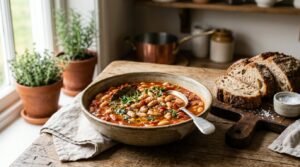
This was the first recipe that made me stop missing meat entirely. White cannellini beans simmered with crushed San Marzano tomatoes, smoked paprika, garlic, and a bay leaf. That’s basically it.
The smokiness from the paprika does something almost magical. It tricks your brain into thinking there’s bacon in there somewhere. I serve this over crusty sourdough bread, and honestly, it’s the meal I make most often when the weather turns cold. A cast iron Dutch oven from Lodge is my go-to pot for this one. The heavy lid keeps everything steaming and tender. One batch feeds me for three days of lunches, which makes it practical on top of being delicious.
2. Rustic Potato and Leek Soup
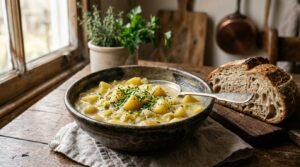
Potatoes are your best friend when you’re new to plant based eating. They’re filling, cheap, and nobody has ever been sad about a bowl of potato soup. Slice up three or four leeks, sauté them in olive oil until they go soft and sweet, then add cubed Yukon Gold potatoes and vegetable broth.
Simmer until everything is fork-tender, then blend half of it with an immersion blender. Leave the other half chunky. That contrast between creamy and chunky is what makes this feel rustic instead of refined. I add a pinch of nutmeg at the end, which sounds weird but genuinely rounds the whole thing out. Top with fresh chives and cracked black pepper. If you want it richer, stir in a spoonful of cashew cream right before serving.
3. Cast Iron Skillet Cornbread (Fully Plant Based)
Good cornbread doesn’t need eggs or butter, and I will stand by that statement forever. Mix together cornmeal, flour, a bit of sugar, baking powder, and salt. For the wet ingredients, use oat milk and a few tablespoons of melted coconut oil.
Preheat your cast iron skillet with a thin layer of oil in it, then pour the batter right in. That sizzle when the batter hits the hot pan is what gives you that crispy golden crust on the bottom. Bob’s Red Mill medium grind cornmeal works perfectly here. Bake at 400°F for about 20 minutes. Pull it out when the edges are golden brown and the center springs back when you tap it. This goes with literally every soup and stew on this list.
4. Hearty Lentil and Root Vegetable Pot
Brown or green lentils are sturdy. They hold their shape and don’t turn to mush the way red lentils do. Combine them with diced carrots, parsnips, celery, and a couple of chopped onions in a big pot with vegetable broth.
Season with thyme, rosemary, and a splash of apple cider vinegar near the end of cooking. That vinegar brightens everything up and keeps the stew from tasting flat. I learned that trick after making about five disappointing batches. The root vegetables give this a sweetness that balances the earthy lentils really well. This is peasant food in the best possible way. Simple ingredients, zero fuss, and incredibly satisfying. I usually make a double batch on Sundays and eat it through Wednesday.
5. Roasted Vegetable Sheet Pan With Herbs
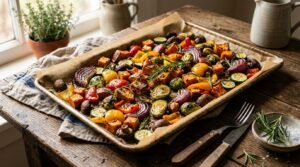
Sometimes you don’t want a recipe at all. You just want to throw things on a pan and let the oven do the work. Cut up whatever you have: sweet potatoes, bell peppers, red onion, zucchini, Brussels sprouts, mushrooms. Toss everything with olive oil, salt, pepper, and fresh rosemary.
Spread it all on a sheet pan lined with parchment paper in a single layer. That single layer part matters. Crowding the pan steams the vegetables instead of roasting them, and steamed vegetables taste sad. Roast at 425°F for 30 to 35 minutes, flipping once halfway through. The edges should be caramelized and slightly charred. I eat this over brown rice with a drizzle of tahini, and it genuinely feels like a feast. This is the meal that taught me plant based cooking doesn’t have to be complicated to be good.
6. Rustic Mushroom and Garlic Toast
Mushrooms have this incredible ability to be meaty without being meat. Slice up a mix of cremini and shiitake mushrooms, then sauté them in olive oil with four or five smashed garlic cloves, salt, and fresh thyme. Cook them on medium-high heat without stirring too much so they actually brown instead of just sweating.
Pile them on thick slices of toasted sourdough or ciabatta. Squeeze a little lemon juice over the top. The acid cuts through the richness and makes the whole thing pop. I sometimes add a handful of arugula on top for a peppery bite. This feels like something you’d order at a farm-to-table restaurant, but it takes about 15 minutes and costs almost nothing to make.
7. Simple Black Bean Chili
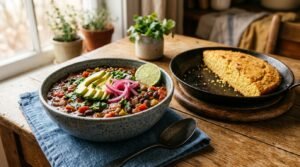
Every new plant based eater needs a solid chili recipe. This one uses two cans of black beans, one can of diced tomatoes, one diced onion, two minced jalapeños, cumin, chili powder, and a tablespoon of cocoa powder. Yes, cocoa powder. It adds depth without making it taste like chocolate.
Simmer everything together for at least 30 minutes. The longer it sits, the better it gets. I’ve eaten this the next day and it was honestly twice as good. Top it with sliced avocado, pickled red onions, and a squeeze of lime. Serve it with the cornbread from recipe number three and you’ve got a meal that would make anyone forget they’re eating plant based food. I brought this to a Super Bowl party once and not a single person asked where the meat was.
Why Rustic Recipes for People Just Starting a Plant Based Diet Actually Work Best
There’s a reason I keep coming back to rustic cooking instead of trendy plant based recipes with twelve specialty ingredients. Rustic food is forgiving. You don’t need exact measurements. You don’t need to track down nutritional yeast or aquafaba on your first grocery run. You need onions, garlic, beans, potatoes, and good olive oil.
When you’re just starting out, the last thing you need is a recipe that makes you feel like you’re failing. Rustic cooking meets you where you are. It uses what’s in season, what’s affordable, and what you probably already have in your pantry. That’s why it sticks. And when the food tastes this good, you stop thinking of plant based eating as a restriction and start thinking of it as just the way you eat.
Stocking Your Pantry for Rustic Plant Based Cooking
Before you cook any of these recipes, do one solid pantry shop. Grab dried or canned beans (black beans, white beans, lentils), canned tomatoes (whole and diced), good olive oil, vegetable broth, onions, garlic, potatoes, and a few key spices: smoked paprika, cumin, chili powder, dried thyme, and dried rosemary.
That small collection covers almost every recipe above. I keep everything stocked on a single shelf in my kitchen. When I’m tired and don’t feel like thinking about dinner, I just look at that shelf and something comes together. Having the basics ready removes the biggest barrier for beginners, which is standing in a grocery store feeling overwhelmed and grabbing frozen pizza instead.
Frequently Asked Questions
Are rustic recipes for people just starting a plant based diet expensive to make?
Not at all. Most of these meals cost under five dollars per batch. Beans, lentils, potatoes, and seasonal vegetables are some of the cheapest foods you can buy. The most expensive item is usually good olive oil, but a bottle lasts weeks. Plant based rustic cooking is genuinely one of the most budget-friendly ways to eat well.
Do I need special kitchen equipment?
A cast iron skillet and a big heavy pot (like a Dutch oven) will carry you through almost everything. A sheet pan and an immersion blender are nice to have but not essential. You can mash soup with a potato masher if you don’t own a blender. Start simple and add tools as you go.
Will I get enough protein from these recipes?
Beans, lentils, and chickpeas are packed with protein. A single cup of cooked lentils has about 18 grams. If you eat a variety of these throughout the week, you’ll hit your protein needs without stressing about it. Add some whole grains like brown rice or quinoa alongside your meals for a complete amino acid profile.
Can I meal prep these recipes?
Absolutely. Almost every recipe on this list tastes better the next day. Soups, stews, and chili all improve as the flavors meld overnight in the fridge. I regularly cook two or three big batches on Sunday afternoon and portion them into glass containers for the week. It saves time and keeps me from ordering takeout on busy nights.
What if my family isn’t plant based?
Serve these meals without announcing they’re plant based. Seriously. A bowl of smoky white bean stew with crusty bread or a loaded black bean chili doesn’t need a disclaimer. Most people won’t even notice there’s no meat. I’ve tested this theory on multiple family dinners and the food always disappears.
Conclusion
Eating plant based doesn’t have to mean eating fancy or unfamiliar. The recipes that kept me going were the simple, rustic ones that tasted like real food and didn’t require a specialty grocery trip. Which one are you going to try first?